
Teen skin today is overwhelmed. Kids see influencers in their twenties pushing products and think they need the same shelf in their bathroom. Sounds harmless, right? Not really. Most of those products are not made for 11 to 17 year old skin. Our experts have spent over 10 years helping teens understand what their skin actually needs and what it absolutely does not. So we are giving you the real talk.
Quick takeaways:
- Most dermatologists agree on three basics: gentle cleanser, lightweight moisturizer, and daily broad spectrum SPF 30+
- Choose one acne active at a time (adapalene or low % benzoyl peroxide) and avoid stacking acids, retinoids, and exfoliants
- Why Teen Skin Is Not Just “Adult Skin, But Smaller”?
- The Only Three Steps Most Dermatologists Agree On for Skincare Routine
- Step 1: Gentle Cleanser
- Step 2: Lightweight Moisturizer
- Step 3: Daily SPF
- Skincare for Ages 11-14
- What They Absolutely Do Not Need Yet?
- Skincare for Ages 15–17
- Ingredients Teens Should Avoid
- How to Identify Your Skin Type?
- Oily
- Dry
- Combination
- Sensitive
- The “Sephora Kids” Problem: Why 12-Year-Olds Are Buying Anti-Aging Serums?
- When It’s Time to See a Dermatologist?
- Building a Simple Product Kit for Skincare Routine for Teens
- FAQ
- Why does salicylic acid work for oily and blemish-prone skin?
- Can teens use exfoliating acids every day?
- What causes severe acne in teens?
- Can skincare products increase the risk of skin cancer?
- Why does my complexion look dull even if I wash my face?
- Should I use products that dry out pimples fast?
- Is oily skin the same as dirty skin?
Why Teen Skin Is Not Just “Adult Skin, But Smaller”?
Teenage skin is sitting in a hormonal storm where oil glands are getting louder and inflammation shows up faster. The American Academy of Dermatology explains it plainly: during puberty, androgens enlarge oil glands, which leads to more oil (sebum) and a higher chance of clogged pores and breakouts. .
So if a teen starts treating their face like a rough countertop (scrubs, stripping cleansers, stacking actives), it usually backfires. Not because they’re “doing skincare wrong,” but because teen skin is already primed for oil + damaged pores + skin irritation.
The Only Three Steps Most Dermatologists Agree On for Skincare Routine
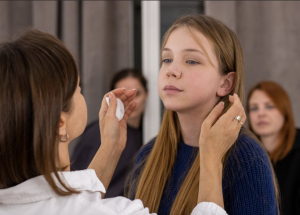
Most dermatologists says that tweens and teens don’t need a 10-step skincare routine. They’re trying to keep young skin stable. Young skin responds better to good skincare habits and consistency, so if you want a solid skincare routine that actually works in real life, it’s these skincare tips.
Step 1: Gentle Cleanser
A gentle cleanser removes sweat, daily sunscreen, and oil without leaving your face tight or squeaky. If your skin feels “stripped” after washing, that cleanser is too harsh, and harsh usually leads to the exact cycle teens hate: dryness and more visible breakouts. Keep it fragrance free if possible, and don’t scrub like you’re punishing your pores. Then you will have a clearer skin without any problems.
Step 2: Lightweight Moisturizer
Yes, don’t create any skincare concerns about it and use the moisturizer even if you have an oily skin. Oily skin can still be dehydrated, and when teens over cleanse or use drying spot treatments, the barrier gets cranky fast. A lightweight, non greasy moisturizer helps prevent that tight, flaky look and makes teenage acne treatments more tolerable.
Step 3: Daily SPF
This is the step teens skip… and it’s the step that quietly matters the most for a healthy skin. The AAD recommends daily broad spectrum sunscreen with SPF 30 or higher as part of basic skin protection. If you’re using acne actives, sunscreen isn’t optional. But even without actives, UV exposure adds itching and sets the stage for long term skin damage. Daily SPF is the simplest “future you” investment you can make.
Skincare for Ages 11-14
Best skin care routines in this age should be simple and boring in the best way.
| Step | What it does? | Example products | Approx. price (USD) |
|---|---|---|---|
| Gentle cleanser | Removes sweat, oil, sunscreen, makeup without stripping | CeraVe Hydrating Facial Cleanser / Vanicream Gentle Facial Cleanser( | ~$6.50-$16 (CeraVe depends on size) |
| Lightweight moisturizer | Keeps the barrier calm so skin doesn’t get tight, flaky, reactive | CeraVe Daily Moisturizing Lotion (common drugstore staple) / Vanicream Moisturizing Cream (sensitive-skin favorite) | typically ~$12-$18 (varies by retailer/size) |
| Daily SPF 30+ broad spectrum | Prevents reaction + protects skin long term (and yes, it matters now) | Neutrogena Ultra Sheer Dry-Touch SPF 55 | typically ~$9-$15 (varies by retailer) |
| Optional: simple acne add-on | Helps clean pores or calm inflamed pimples without going nuclear | CeraVe SA Cleanser (2-3 nights/week) / Differin Gel (adapalene 0.1%) for persistent acne | SA cleanser often ~$13-$16 / Differin often ~$11-$15 |
What They Absolutely Do Not Need Yet?
Now the part parents usually love: skin products and things they can stop buying.
| Things to Skip | Why it’s a bad idea at 11-14? | What to do instead? |
|---|---|---|
| 9-step routines and constant product switching | More steps = more bad reaction + less consistency | Pick 2-3 basics and stick to them |
| Harsh scrubs, cleansing brushes, “deep clean” toners | Stripping the barrier makes redness + bumps worse | Gentle cleanser + fingertips |
| Strong peels / high % acids / “tingly” masks | Tingling isn’t “working,” it’s itching | If exfoliation is needed, use mild SA 2–3x/week max |
| Anti-aging serums (retinol, strong vitamin C, etc.) | Overkill and common dryness triggers | Focus on SPF and barrier support |
| Essential oils / fragranced “pretty” skincare | Higher risk of dryness and contact reactions | Fragrance-free basics (yes, boring wins) |
| Random TikTok actives stacked together | That’s how you get a rash and call it “purging” | One acne active at a time, slowly |
Skincare for Ages 15–17
Hormones are louder, sports/sweat are constant, makeup is more common, and stress is basically a lifestyle for a younger skin. So yes, skincare for teens and tweens at this age can include more than 11-14, but “more” still doesn’t mean “throw your entire bathroom shelf at your face.”
| Step | What it does? | Example products | Approx. price (USD) |
|---|---|---|---|
| Gentle cleanser | Cleans sweat, oil, sunscreen without stripping | CeraVe Foaming Face Wash 12 oz / Vanicream Gentle Facial Cleanser | $13.69 for CeraVe 12 oz / Vanicream usually ~$9-$12 |
| Lightweight non-comedogenic moisturizer | Keeps barrier calm so acne steps don’t turn into irritation | CeraVe Daily Moisturizing Lotion / Vanicream Moisturizing Cream | usually ~$12-$18 |
| Daily SPF 30+ broad spectrum | Helps prevent irritation + protects long-term | Neutrogena Ultra Sheer Dry-Touch SPF(common drugstore staple) | usually ~$9-$15 |
| Acne active | Treats breakouts without nuking the barrier | Differin Adapalene 0.1% Gel 15g / Benzoyl Peroxide 2.5-4% | $13.49 for Differin 15g / BP often ~$8-$12 |
| Spot support | Stops picking, calms single pimples | Hydrocolloid patches (Hero, etc.) | usually ~$9-$22 |
About benzoyl peroxide: don’t let higher percentages bully your skin health. Lower strengths (like 2.5%) can be as effective as higher strengths with less irritation.
Ingredients Teens Should Avoid
| Ingredient / product type | Why it’s a problem at 15-17? | What to do instead? |
|---|---|---|
| Harsh scrubs, gritty exfoliants, cleansing brushes | Micro-irritation + barrier damage makes dealing with acne more problematic | Gentle cleanser + a mild acne active |
| Stacking actives (AHA + BHA + retinoid + benzoyl peroxide) | That’s not a simple routine, that’s chemical bullying and it can even strip the skin | Pick one active, add slowly |
| High-percentage acids “for glow” | Over-exfoliation = stinging, peeling, rebound oiliness | If needed: low-strength BHA a few nights/week |
| Fragrance-heavy skincare and essential oils | Common irritation triggers, especially when you’re also treating acne | Fragrance-free basics |
| Alcohol-heavy toners (“pore-tightening,” “deep-clean”) | Can cause dryness and a long-term skin problems | Moisturizer + SPF, keep it calm |
| DIY hacks (lemon, toothpaste, baking soda) | Irritation city, and your barrier will remember it | Real spot options: hydrocolloid patch or low % BP |
How to Identify Your Skin Type?

Kids have different skin conditions, which means skincare for teenagers is not one size fits all. What works for one teen may be totally wrong for another. The daily skincare routine should match their skin type, not trends.
Here’s the simplest method to understand your type: wash your face with a gentle cleanser, pat dry, and leave it alone for about an hour. No moisturizer, no makeup. Then check your skin in natural light.
Oily
After an hour, your face looks shiny, especially across the forehead, nose, and chin. You may notice:
- enlarged pores
- frequent clogged pores
- blackheads
- breakouts that feel deep or inflamed
- makeup sliding off quickly
Oily skin is common in teens and it requires balanced skin care.
Dry
After your morning cleanse, you will feel it right away:
- flaking
- rough patches
- dull appearance
- small, less visible pores
- stinging when applying products
Dry teen skin is less common than oily, but it exists. If your face feels uncomfortable without moisturizer, dryness may be your dominant skin concern. Dry skin needs hydration and barrier support, not exfoliation.
Combination
The most common type for teens. Your T-zone (forehead, nose, chin) becomes shiny, but your cheeks feel normal or even slightly dry. You may see:
- clogged pores in the nose area
- occasional breakouts in the T-zone
- dryness around the jawline
- uneven oil distribution
Sensitive
Sensitive skin is about reaction. You may notice:
- redness easily
- stinging after product application
- frequent irritation
- sudden breakouts after trying new products
- visible inflammation
Teen skin can be sensitive even if it’s oily. Often, sensitivity is linked to a weakened skin barrier, usually from over-exfoliation or using products that are too harsh. If your skin reacts quickly and often, your routine should be extremely simple and fragrance-free.
The “Sephora Kids” Problem: Why 12-Year-Olds Are Buying Anti-Aging Serums?
Because anti aging got rebranded as self care, and now kids are being sold the idea that preventing wrinkles at 12 is the most effective skincare routine.
That is a mistake. Kids’ skin is different and it does not have adult problems to fix. Using strong ingredients like retinol can do serious harm. It can destroy the skin barrier and cause dryness for no reason.
In 2025, a study in Pediatrics looked at teen skincare videos on TikTok. They found that most routines had about six products and cost around 168 dollars. Many products had ingredients that can cause redness or allergies. Only 26 percent of the routines included sunscreen.
When It’s Time to See a Dermatologist?
Consider professional help when serious skin problems appear and you cannot manage them yourself, for example:
- acne breakouts is deep and painful
- cysts form under the skin
- scarring begins to appear
Building a Simple Product Kit for Skincare Routine for Teens
Building a simple product kit at every budget is basically choosing function over hype.
| Options | Examples | ~Price |
|---|---|---|
| Cleanser + SPF (and you can borrow a plain moisturizer from home if needed) | CeraVe Foaming Face Wash (3 oz) + Neutrogena Ultra Sheer Dry Touch SPF 70 (3 oz) | ~$15-$20 |
| Cleanser + moisturizer + SPF | CeraVe Foaming Face Wash (12 oz) + Vanicream Moisturizing Cream (16 oz) + Neutrogena Ultra Sheer SPF 70 (3 oz) | ~$37 |
| The solid kit + one acne add-on | Everything in the “Solid” kit (~$37) + PanOxyl 4% BP Creamy Wash (6 oz) ) | ~$47 |
| Solid kit + acne treatment + patches for emergencies | Solid kit + Differin Adapalene 0.1% Gel (15g) + PanOxyl 4% Wash | ~$60 |
| Same logic, nicer textures | Upgrade sunscreen to a premium face SPF like La Roche Posay Anthelios Mineral SPF 50 | ~$90–$120+depending on choices |
If you want a pimple-patch option (because teens pick and then blame the universe), Hero Mighty Patch Original is a common go-to.
FAQ
Why does salicylic acid work for oily and blemish-prone skin?
Salicylic acid is oil-soluble. That means it can move into pores and remove dead skin cells.
Can teens use exfoliating acids every day?
No.
What causes severe acne in teens?
Severe acne is driven by hormones, excess oil, inflammation, and bacteria. It is not caused by a skin texture or “dirty skin.” If acne is deep, painful, cystic, or leaving marks, over-the-counter products are usually not enough. A dermatologist should step in early to prevent scarring.
Can skincare products increase the risk of skin cancer?
Most teen skincare products do not increase cancer risk. What does increase long-term risk is skipping sunscreen.
Why does my complexion look dull even if I wash my face?
This happens when the wrong products damage developing skin and make it look rough. It is time to rethink the skincare routine.
Should I use products that dry out pimples fast?
Products that aggressively dry out the skin can bring only problems. Lower strengths used consistently work better than harsh, high-percentage formulas.
Is oily skin the same as dirty skin?
No. Oily skin is hormone-driven. During puberty, oil glands enlarge and produce more sebum. That does not mean the skin is unclean. Over-washing actually increases irritation and can worsen breakouts.