
On this page
- What Makes Tween Skin Different?
- And the biggest risk at this age?
- Common Skin Issues at This Age
- Does a Tween Even Need a Skincare Routine?
- The Only Products Most Tweens Actually Need
- Gentle Cleansers
- Moisturizers for Different Skin Types
- Daily SPF
- How to Choose the Right Cleanser?
- Do Tweens Need Toner?
- When Acne Starts: What’s Safe to Use?
- What NOT to Use at This Stage?
- When Not to Overreact?
- Spot Treatments: What’s Safe for Tweens?
- What’s Safe for Tweens?
- What Spot Treatments Should Never Do?
- A Simple Tween Skincare Routine (Step-by-Step)
- Morning Routine
- Evening Routine
- Exfoliation
- FAQ
- Is teen skincare the same as skincare for tweens?
- Do tweens need products labeled for acne-prone skin?
- What ingredients are safe for teens with acne-prone skin?
- Can tweens use a cleanser with salicylic acid?
- What is azelaic acid, and can tweens use it?
- Will skincare brighten dull skin at this age?
- Is retinol okay for tweens?
- Can hyaluronic acid be used at this age?
- Should moisturizers be non-comedogenic?
- Is exfoliation necessary to remove dead skin cells?
Walk into any beauty store today and you’ll see something wild: ten year olds comparing serums like they’re skincare executives. And honestly?
That’s not great. It shows most kids are using products they don’t actually need. Our experts have spent over 10 years helping tweens understand what’s right for their skin and what’s just hype. We’re going to break it down and give you the only info that actually matters.
Quick takeaways:
-
Eczema affects about 1 in 10 people in the U.S., often beginning in childhood
-
Puberty related hormonal changes can begin as early as age 8 in girls and 9 in boys
-
Avoid stacking actives (acids + benzoyl peroxide + retinoids). Overuse weakens the barrier and can trigger irritation that looks like acne
What Makes Tween Skin Different?
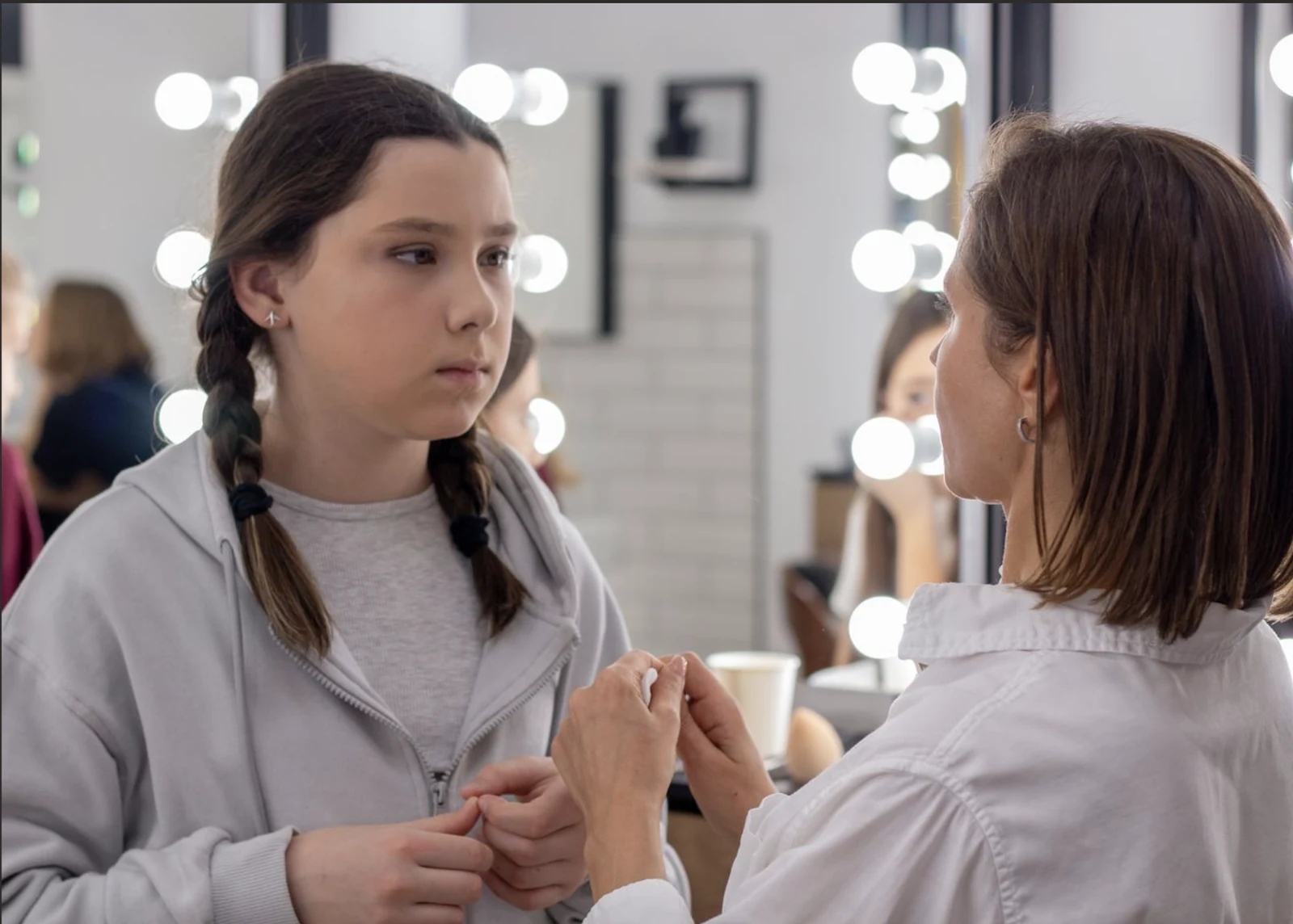
Tween skin is in transition. It’s no longer little kid skin, but it’s not fully teen skin either. Hormones are starting to shift, but oil production hasn’t hit full puberty mode.
Dermatology research published in the Journal of Investigative Dermatology shows that the skin barrier in children and pre adolescents is thinner and more permeable than in adults. That means it loses water faster and absorbs active ingredients more easily.
Here’s what actually defines tween skin:
- The skin barrier is still developing
- Oil production may begin increasing slightly
- Healing tends to be fast
- Sensitivity is often higher than in adults
- Overuse of products can trigger irritation quickly
According to the American Academy of Pediatrics, puberty related hormonal changes can begin as early as age 8 in girls and 9 in boys. But oil gland activity typically ramps up gradually, not overnight.
Tween skin does not usually need aggressive skin care or acne treatment. It needs maintenance and protection.
And the biggest risk at this age?
It’s overcorrecting. When harsh exfoliants, retinoids, strong acids, or drying cleansers are introduced too early, the barrier weakens. Research consistently shows that barrier disruption increases transepidermal water loss, which leads to dryness, redness, stinging, and paradoxical breakouts.
Common Skin Issues at This Age
Common skin issues at this age are usually manageable and honestly… massively overtreated by kids who just discovered “actives.” Tween skin tends to run into a few repeat offenders.
First, mild early acne: blackheads and small bumps on the forehead, nose, and chin, sometimes a couple of inflamed pimples. This is normal as hormones start shifting, and acne is one of the most common skin conditions overall. That said, most tweens are not dealing with severe inflammatory acne yet. They usually need gentle maintenance.
Second, dryness and eczema (atopic dermatitis). Eczema is very common in kids; the National Eczema Association reports that eczema affects around 1 in 10 people in the U.S., and it often begins in childhood. The key detail people miss is that “eczema looking” skin can also be triggered or worsened by contact reactions to things like fragrance and certain preservatives, and the AAD has guidance on allergic/contact triggers overlapping with eczema symptoms.
Third, irritant or contact dermatitis from “innocent” products: fragranced cleansers, harsh scrubs, alcohol heavy toners, heavily scented lotions, even hand sanitizer residue that ends up on the face. Pediatric guidance from the American Academy of Pediatrics discusses common irritants and allergens in contact dermatitis, including soaps/detergents and fragrances/dyes. This is the classic “my skin suddenly hates everything” moment that is not hormones, it is irritation.
Fourth, keratosis pilaris (KP), the “chicken skin” texture that shows up on arms, thighs, and sometimes cheeks. It’s extremely common in children and teens. And yes, people make it worse by scrubbing like they’re trying to sand furniture.
Does a Tween Even Need a Skincare Routine?
A tween can have a skincare routine, but if the routine looks like an adult Sephora haul, it’s not skincare anymore.
It should be basically the simplest possible trio: gentle cleanser, fragrance free moisturizer, and daily broad spectrum sunscreen (SPF 30+).
When to add an “acne step”: only if there’s actual acne that’s sticking around (not one random pimple). And even then, start slow. Also, keep it real: the FDA has warned about rare but serious hypersensitivity reactions reported with some OTC acne products (commonly benzoyl peroxide/salicylic acid products), so patch test and stop if there’s swelling or severe reaction.
The Only Products Most Tweens Actually Need
So now we’ve covered the basics of what you actually need. Next, we put together three tables with quality, affordable products that can help your skin without damaging it.
Gentle Cleansers
| Product | Best For | Why It Works? | Approx. Price (USD) |
|---|---|---|---|
| CeraVe Hydrating Cleanser | Normal to dry tween skin | Ceramides support skin barrier; non-foaming; fragrance-free | $15 |
| CeraVe Foaming Facial Cleanser | Slight oiliness starting | Removes excess oil without stripping | $16 |
| Cetaphil Gentle Skin Cleanser | Sensitive skin | Ultra-mild; dermatologist classic | $14 |
| Vanicream Gentle Facial Cleanser | Reactive/sensitive skin | No fragrance, no irritants | $12 |
Moisturizers for Different Skin Types
| Skin Type | Product | Why It’s Safe for Tweens? | Approx. Price |
|---|---|---|---|
| Normal/Combination | CeraVe Daily Moisturizing Lotion | Lightweight, barrier-supporting | $16 |
| Oily/Early Breakouts | La Roche-Posay Toleriane Double Repair | Oil-free feel, hydrates without clogging | $22 |
| Sensitive | Vanicream Moisturizing Cream (lite use) | Minimal ingredient list | $14 |
| Slightly Dry | Cetaphil Moisturizing Lotion | Simple hydration without heaviness | $15 |
Daily SPF
| Product | Why It’s Good for Tweens | Approx. Price |
|---|---|---|
| Neutrogena Sheer Zinc SPF 50 | Mineral-based; gentle | $14 |
| Blue Lizard Sensitive SPF 30+ | Designed for sensitive skin | $18 |
| CeraVe AM Facial Moisturizer SPF 30 | Moisturizer + sunscreen combo | $18 |
How to Choose the Right Cleanser?
For a tween, the right cleanser should do one job: remove sweat, sunscreen, and school day grime without stripping the barrier.
Here’s how to pick one without getting played by marketing.
Start with your skin vibe:
-
If you’re mostly normal or a little dry, pick a gentle hydrating cleanser (cream or lotion texture).
-
If you’re getting a shiny T zone or tiny bumps, go for a gentle foaming cleanser, but still mild.
-
If you’re sensitive or get red easily, you want fragrance free, simple formulas. No “minty fresh” face wash. That’s not skincare, that’s a prank.
Read the label like a grown up:
-
Look for “fragrance free” (not “unscented”, it can still contain masking fragrance).
-
Avoid cleansers marketed as “deep clean,” “oil annihilator,” “pore detox,” or anything that sounds like it belongs in a pressure washer.
-
Skip physical scrubs. If there are gritty beads, put it back. Your face is not a kitchen countertop.
About acne ingredients: if you truly need them, keep it basic and slow.
Do Tweens Need Toner?
If tweens and teens use modern, well formulated products, the answer is no.
Alcohol and harsh ingredients in toner will only damage young skin. They strip the barrier and trigger more oil production. That is the opposite of healthy skin. A proper skincare routine for teenage skin should be simple and barrier friendly.
When Acne Starts: What’s Safe to Use?
When acne starts in the tween years, the goal is not to “destroy oil.” It’s to keep skin calm while you handle early clogged pores and the occasional pimple.
| What’s safe to use? | Best for | Example products | Approx. price (USD) |
|---|---|---|---|
| Gentle cleanser (fragrance free) | Everyone, including sensitive skin | CeraVe Foaming Face Wash 12 oz / Cetaphil Gentle Skin Cleanser 16 oz | ~$9-$16 |
| Salicylic acid cleanser (gentle, not daily at first) | Blackheads, tiny clogged bumps | CeraVe SA Face Wash | ~$13-$16 |
| Basic moisturizer (fragrance free) | Barrier support, dryness from school + weather + “oops I overcleansed” | CeraVe Daily Moisturizing Lotion 12 oz / Vanicream Moisturizing Cream 16 oz | ~$14-$15 |
| Benzoyl peroxide (start low, spot use or short contact) | Inflamed pimples | PanOxyl 4% Creamy Wash (short-contact: 30-60 sec then rinse) | ~$9.99 |
| Hydrocolloid pimple patches | Whiteheads + “stop picking” support | Hero Mighty Patch | ~$9-$22 |
| Daily sunscreen SPF 30+ | Everyone (especially if you’re using acne actives) | Neutrogena Ultra Sheer Dry Touch | ~$9-$12 |
What NOT to Use at This Stage?
| Bad Options | Why it’s a problem? |
|---|---|
| Harsh scrubs / cleansing brushes | Micro irritation + barrier damage = more redness and bumps |
| High strength acids (strong AHA peels, high % BHA leave ons) | Too easy to over exfoliate, burn, or trigger dermatitis |
| Retinoids “because TikTok said so” | Over dryness and irritation risk if there’s no real acne plan |
| Multi active stacking (acid + retinoid + BPO same night) | This is how you create “acne” that’s actually irritation |
| Fragrance heavy “pretty” cleansers and masks | Common irritation trigger, especially for sensitive kids |
| Alcohol heavy toners / “pore stripping” products | Tight skin isn’t clean skin, it’s stripped skin |
| DIY lemon, toothpaste, baking soda hacks | Chemical irritation in a cute little home experiment |
| Anything that stings every time | Stinging is not “working,” it’s irritation |
When Not to Overreact?
You should NOT escalate treatment when:
- Breakouts are occasional
- Skin is otherwise calm
- There is no scarring
- Pimples heal within a few days
Over-treating early acne often damages the skin barrier.
Spot Treatments: What’s Safe for Tweens?
Spot treatments should be the skincare equivalent of a fire extinguisher: small and used only when there’s actually a fire.
What’s Safe for Tweens?
| Spot option | Best for | How to use it like a sane person? |
|---|---|---|
| Hydrocolloid pimple patches | Whiteheads, “I keep touching it” | On clean, dry skin. One patch overnight. Don’t layer acids under it. |
| Benzoyl peroxide 2.5% (spot or short contact) | Red, inflamed pimples | Tiny dab on the pimple only, 2-3 nights/week at first. Or use a low % wash for 30-60 sec then rinse. Moisturize after. |
| Salicylic acid (low %) | Blackheads / clogged bumps | Start with a rinse off SA cleanser 2-3 nights/week, not daily. |
| Warm compress | Tender “under the skin” bumps starting | Warm (not hot) compress 5-10 minutes, then leave it alone. |
| Plain moisturizer “buffer” | Irritated, dry, stinging skin that looks like acne | Pause actives for a few days. Cleanse gently + moisturize. |
What Spot Treatments Should Never Do?
They should never sting hard or peel your skin daily. That’s irritation. The AAD’s acne advice is literally built around avoiding over scrubbing and irritation because it can make acne look worse.
They should never be used like a full face mask. Spot means spot. If you’re painting benzoyl peroxide across the whole face at age 10, you’re not “preventing acne,” you’re drying out skin that wasn’t that oily yet.
They should never cause swelling, hives, throat tightness, trouble breathing, or facial swelling. The FDA warns that some OTC acne products can cause rare but serious hypersensitivity reactions.
They should never be stacked like: acid + benzoyl peroxide + retinoid + “purging.” That’s how you end up with red, inflamed, reactive skin and call it “breakouts.”
They should never encourage picking. Anything that makes a pimple crusty and tempting to scratch is not your friend. Patches are better for behavior control than harsh drying formulas.
A Simple Tween Skincare Routine (Step-by-Step)
If you want glowing skin, you do not need some crazy 10 step routine. We stripped it down to the essentials. Here is what actually matters in the morning and what you should focus on at night.
Morning Routine
Morning skincare is like breakfast. It helps your skin wake up and get the energy it needs:
- Gentle Cleanser (Optional if skin is dry). If you have oily skin in the morning, wash with a mild cleanser. If not, lukewarm water is fine.
- Lightweight Moisturizer, even if the skin isn’t “dry.” Hydration supports the skin barrier and prevents rebound oil production. Use a small amount. Smooth, don’t rub aggressively.
- Step 3: SPF 30+. Yes, even for tweens. Sun exposure worsens inflammation and increases long-term damage.
Evening Routine
Evening is about cleaning the day off gently:
- Cleanser. Remove sweat, dirt, sunscreen. Massage gently for 20-30 seconds. Rinse thoroughly.
- Spot Treatment (Only If Needed). Apply directly to active pimple. Not all over. Let it dry before moisturizer.
- Moisturizer. Yes, even at night. This helps repair the skin barrier and maintain balance.
Exfoliation
Exfoliation is the step tweens overdo the fastest, because it feels like you’re “doing something.” In reality, at 9-12 your skin usually doesn’t need aggressive exfoliation. It needs a calm barrier.
If a tween truly needs exfoliation, it’s usually for mild clogged pores (tiny bumps/blackheads), not for “glow,” and definitely not because a 20 year old influencer said everyone needs acids.
| Exfoliation option | Best for | Example products | Approx. price (USD) | How to use? |
|---|---|---|---|---|
| Rinse off BHA (salicylic acid) cleanser | Blackheads, tiny clogged bumps on T zone | CeraVe Renewing SA Cleanser / Cetaphil Gentle Clear Salicylic Acid Acne Pore Cleanser | ~$12.99-$13.69 | Start 2-3 nights/week, not daily. If you get tightness or stinging, back off and moisturize. |
| Leave on BHA exfoliant (only if mature + mild routine already) | Persistent congestion that doesn’t respond to cleanser | PanOxyl Clarifying Exfoliant 2% SA | ~$10.99 | 1-2 nights/week max at first. Tiny amount. No stacking with other actives. Moisturizer after. |
| “Gentle exfoliating” cleanser variant | Kids who want “something extra” but you want low drama | Cetaphil Exfoliating Salicylic Acid Cleanser | ~$9.99 | Treat it like an active: 2-3x/week, not daily. |
| Ultra gentle manual exfoliation | Flaky sunscreen buildup / “feels rough” but skin is sensitive | A soft washcloth + gentle cleanser (no beads, no gritty stuff) | ~$0-$5 | Light pressure, 10-15 seconds, then stop. If you’re scrubbing, you’re doing it wrong. |
FAQ
Is teen skincare the same as skincare for tweens?
No. Teen skincare is usually designed for stronger oil production and more persistent breakouts.
Do tweens need products labeled for acne-prone skin?
Only if they actually have consistent breakouts.
What ingredients are safe for teens with acne-prone skin?
Low-dose salicylic acid in a rinse-off formula for clearing dead skin cells. Niacinamide can support oil balance and redness reduction.
Can tweens use a cleanser with salicylic acid?
Yes, but only occasionally and gently. .
What is azelaic acid, and can tweens use it?
Azelaic acid helps reduce redness and small bumps without strong peeling. For tweens with sensitive skin or small breakouts, a low dose of this can work.
Will skincare brighten dull skin at this age?
Products meant to brighten (like strong vitamin C serums) are usually too intense for tween skin. Instead, hydration and sun protection naturally improve dullness.
Is retinol okay for tweens?
Usually no. It is strong and made for older teens and adults. For younger tweens, it can cause dryness and irritation.
Can hyaluronic acid be used at this age?
Yes, but keep expectations realistic. Hyaluronic acid is a hydration-supporting ingredient, not an acne treatment.
Should moisturizers be non-comedogenic?
Yes.
Is exfoliation necessary to remove dead skin cells?
Only occasionally. The skin naturally sheds dead skin cells on its own.